
2026-10-08 · Ryan Thompson
How Temperature Swings Affect Home AC Performance
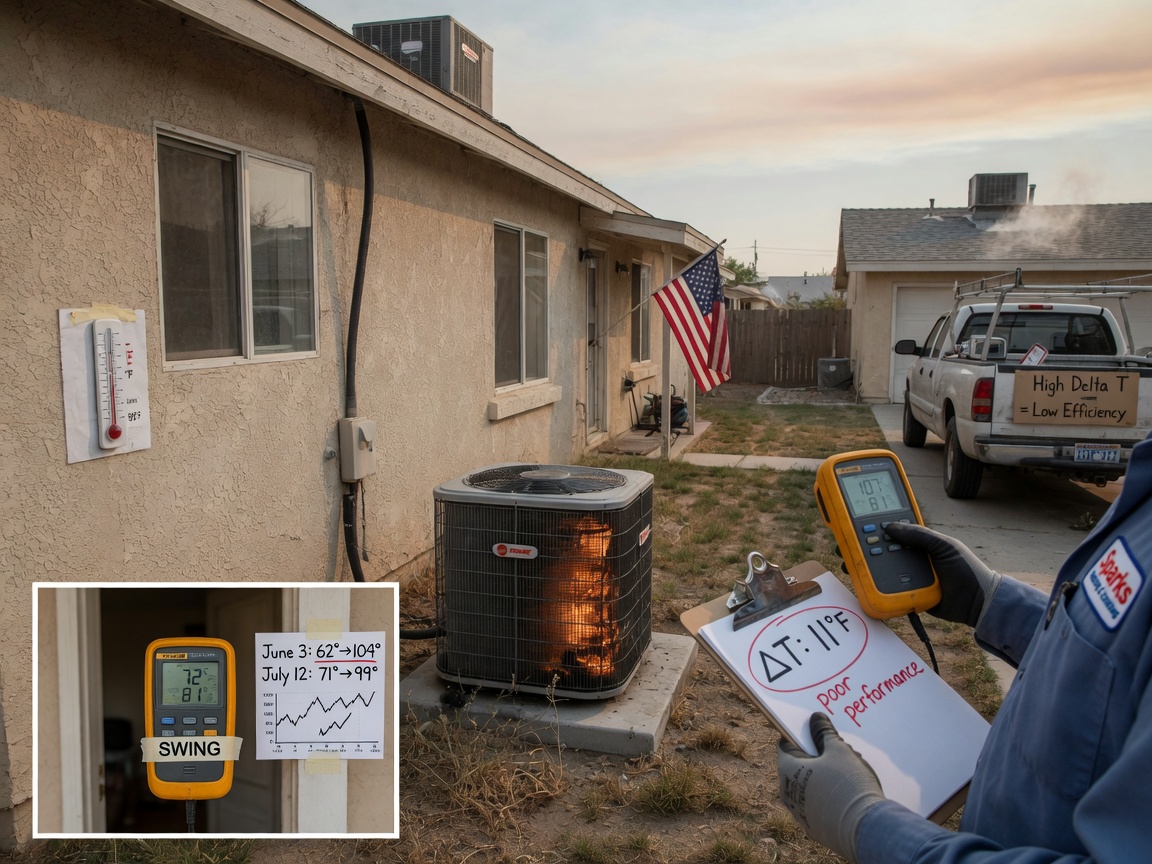
In Sparks, Nevada's high desert climate, daily temperature swings of 30 to 50 degrees force home AC systems to cycle 20-30% more frequently on peak summer days, shortening compressor life and increasing energy consumption across neighborhoods from Spanish Springs to D'Andrea.
How Washoe County's High Desert Climate Creates Extreme Swings
Sparks sits in Washoe County where elevations and clear skies produce sharp day-to-night drops even when daytime highs reach the 90s. Homes near the Sparks Marina or Victorian Square often sit on older slabs with minimal insulation, so indoor temperatures climb quickly once the sun sets and the system restarts. These swings repeat from late spring through early fall, with similar patterns extending into nearby Reno and Sun Valley. The result is repeated startup torque on motors and valves that see less stress in milder climates. Local terrain funnels afternoon winds that can drop evening temperatures fast, pushing the AC back into cooling mode within hours of shutdown. This pattern repeats across Wingfield Springs properties built on exposed lots where radiant heat from pavement adds extra load during the warmest hours.
Increased Cycling and Compressor Stress
Each 30-plus degree swing causes the thermostat to call for cooling multiple times daily rather than maintaining steady operation. The compressor experiences more starts and stops, which generates heat in the windings and stresses the start capacitor. In high desert conditions, refrigerant pressures fluctuate with outdoor temperature changes, forcing the system to rebalance repeatedly. Over one season this added cycling can reduce expected compressor lifespan by several years compared with steady-load regions. Ductwork in homes built before 2000 often lacks proper sealing, so short cycles pull in attic air that is 20 degrees hotter than the living space, compounding the workload. Technicians see these patterns most often on units serving Spanish Springs where afternoon sun exposure is intense.
Effects on System Efficiency During Summer Peaks
Rapid temperature changes reduce SEER performance because the unit never reaches optimal steady-state operation. Each restart draws a surge of power that adds 5-10% to monthly bills when swings occur on 80-plus days per summer. Evaporator coils collect more condensate during short runs, which can freeze if airflow is restricted by dust common in the region. Homeowners in D'Andrea notice higher humidity indoors on days when the system cannot run long enough to remove moisture fully. The same swings that affect cooling also influence early fall heating demands, creating year-round stress on shared components like the blower motor. Regular filter changes become more critical here because desert dust loads the system faster during the frequent on-off periods.
Practical Steps to Monitor Performance
Track daily temperature differentials with an indoor-outdoor thermometer to spot when your unit is struggling to keep up. Listen for short cycling that lasts under seven minutes, a sign the system is reacting to rapid outdoor drops rather than maintaining set points. Check that supply vents deliver consistent airflow across rooms, especially in older Wingfield Springs homes where duct insulation may have settled. Schedule AC maintenance before the hottest months to verify refrigerant levels and clean coils that accumulate extra dust during frequent cycles. If performance drops after a string of 40-degree swings, review common AC issues from desert dust in Sparks Nevada for targeted checks. For units showing repeated short cycles, AC repair technicians can adjust thermostat differentials or add time-delay controls suited to local conditions. Residents in Spanish Springs benefit from these adjustments because their exposure to both daytime heat and nighttime cooling is pronounced.